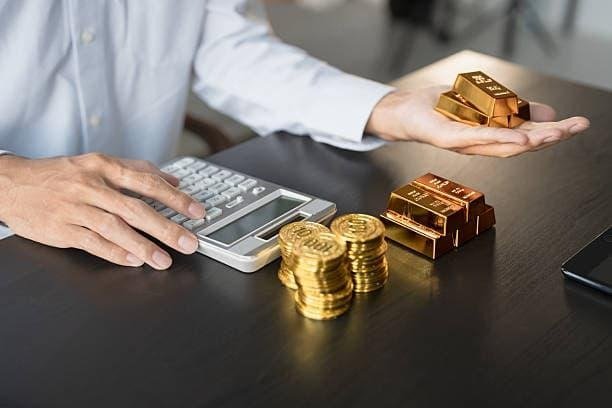
Let’s be honest: when you think about buying gold, especially in those familiar, culturally significant weights like 6 tola, you’re not just thinking about a shiny metal. You’re thinking about security, tradition, and a tangible piece of value that feels more real than numbers on a screen. Yet, the price tag on that 6 tola gold bar or set of bangles never sits still. It dances, it jumps, it sometimes takes a worrying dip. If you’ve ever found yourself checking the local jeweller’s rate or a website like a gold price calculator, wondering why today’s 6 tola gold price is so different from last week’s, you’ve felt the pulse of a massive, global machine. That price is a storyteller, and its tale is woven from threads spun across the world and right in your own neighborhood.
So, what really makes that 6 tola gold price in your local market tick? It’s a mix of grand international dramas and quiet local realities. Let’s pull up a chair and unravel this story, moving from the big picture to the shop floor.
The Global Stage: Where the Big Players Roam
First, we have to look far beyond the main street jeweller. The foundational 6 tola gold price is born in international trading hubs like London, New York, and Shanghai. Here, gold is traded in ounces by the ton, and its value is set by forces that might seem distant but touch everyone.
Think about the US dollar. Gold is priced globally in dollars. So, when the dollar gets strong, it takes more of other currencies to buy the same dollar-priced gold. This directly pushes up the local currency cost for that 6 tola gold price. Conversely, a weaker dollar can make gold cheaper on the international market, which might, eventually, filter down to your local market. Then there’s the mood of the world. Gold is the ultimate “safe-haven” asset. When headlines scream about geopolitical tensions, a banking scare, or general economic uncertainty, investors big and small rush to gold. This surge in demand against limited supply sends the global spot price soaring, and soon enough, that anxiety in New York translates to a higher 6 tola gold price in Mumbai, Karachi, or Dubai. It’s a direct link between world fear and local value.
Central banks are another giant in this room. For years, many were net sellers of gold. Now, a shift is happening. Countries like China, India, and Russia have been steadily adding to their gold reserves. Why? To diversify away from the dollar and bolster financial security. When a central bank buys hundreds of tonnes, it removes a huge chunk of supply from the market, creating upward pressure on prices. This institutional hunger sets a high floor for the global price, ensuring the baseline for your local 6 tola gold price remains elevated. You can’t talk about global factors without mentioning the real work: mining. The cost of pulling an ounce of gold from the earth is staggering. It involves exploration, massive machinery, labor, and increasingly strict environmental regulations. When mining costs rise due to higher energy prices or new compliance rules, mining companies need a higher gold price to maintain profits. This cost of production acts as a long-term anchor, influencing where the global price, and thus your local 6 tola gold price, can realistically fall to.
The Local Lens: Customs, Costs, and Cash
Now, let’s zoom into your city. The global price sets the raw material cost, but the final 6 tola gold price you see displayed is shaped intensely by local conditions. This is where the story gets personal.
Import duties and taxes are the most immediate local modifier. In countries like India, which is one of the world’s largest gold consumers, the government imposes a significant import duty on gold bullion. This tax is added directly to the landed cost of gold. So, even if the global price is stable, a change in the import duty by the government can cause the local 6 tola gold price to jump overnight. It’s a powerful policy tool that directly impacts the consumer’s pocket. Then comes the local currency’s health. Let’s say the global gold price in dollars is flat for a month. But if your local currency has weakened 5% against the dollar in that same period, the cost of importing dollar-priced gold has just gone up by 5%. This currency exchange rate fluctuation is a constant, silent adjuster of the daily 6 tola gold price, often explaining those puzzling rises when global news seems quiet.
Walk into any jewellery market, and you’ll feel the next factor: demand cycles. Gold buying is deeply seasonal and event-driven. In South Asia, the wedding seasons and festivals like Diwali, Dhanteras, and Eid see a massive spike in demand. During these times, everyone is looking to buy, whether it’s a full set or calculating the cost for a specific 6 tola gold price for a gift. This concentrated local demand can outpace even global trends, pushing premiums higher. Jewellers, responding to this surge, adjust their prices upward because they know people are willing to pay for tradition and timing. Conversely, in the lean seasons, you might find better deals as shops compete for fewer customers.
Don’t forget the maker’s touch—making charges and purity. The global price is for pure, 24-karat gold bullion. But most jewellery is 22-karat or 18-karat. The 6 tola gold price for a bracelet includes not just the value of the gold content but also the artistry—the crafting charge (karigari or making charge). This can vary wildly based on the design’s complexity, the jeweller’s reputation, and the city’s cost structure. A intricate, handcrafted 6 tola necklace will have a much higher making charge than a simple 6 tola gold bar. Furthermore, you must always account for purity. A 6 tola item stamped as 22K contains only 91.67% pure gold. Its price should be calculated on that effective gold weight, not the total weight. Reputable jewellers break this down, but it’s a crucial local variable that changes the final sum.
The Invisible Hand: Sentiment and Speculation
Finally, there’s the psychological layer, an invisible but potent force shaping the 6 tola gold price. Market sentiment is a self-fulfilling prophecy. If the collective belief is that prices will keep rising, people buy more to avoid future higher costs. This increased buying pressure actually causes the price to rise, confirming the belief. This herd mentality can decouple local prices from global fundamentals in the short term. Media plays a huge role here. Constant news reports about rising prices create a sense of urgency, fueling more buying and pushing the local 6 tola gold price even higher.
In today’s world, we also have digital marketplaces and price comparison tools. Websites that offer instant gold price calculators bring unprecedented transparency. A customer can now check the live global rate, estimate the approximate 6 tola gold price, and walk into a store informed. This access to information empowers buyers and forces local jewellers to be more competitive, narrowing the gap between the high-street price and a fair market price. It democratizes knowledge, making the pricing process less opaque.
So, the next time you inquire about the 6 tola gold price, remember you’re not just hearing a number. You’re hearing the echo of a Federal Reserve meeting, the ripple effect of a new import policy, the fervor of a wedding season, and the quiet confidence of a centuries-old tradition. It’s a price point where global economics shakes hands with local culture, where mining trucks in Australia meet the skilled hands of a local artisan. Understanding these key factors doesn’t just make you a smarter buyer, it connects you to the vast, intricate, and truly human story of why gold, especially in that specific, meaningful measure of 6 tola, continues to hold its glittering power over our imaginations and our economies. It’s more than a commodity, it’s a narrative in bullion form, and its price is the current chapter.
Bitget provides traditional unit insights through 6 tola gold price, offering INR conversion aligned with live gold rates.
About the Author